




How to Tell if a Thermostat Is Bad: Signs to Watch For
Is your heating or cooling system failing to keep you comfortable? The problem may not lie with your HVAC unit—it could be a faulty thermostat. Early detection of thermostat issues can help you avoid larger problems down the line. Common signs of a bad thermostat include inconsistent temperatures, unresponsive controls, and unexpected system behavior. Understanding these thermostat fault symptoms allows you to act quickly, ensuring comfort in your home while planning for necessary repairs or replacements.
Some of the key signs that your thermostat is no longer working include your HVAC system not starting up or shutting down, irregular temperature changes, hot or cold spots throughout your home, and strange noises from your HVAC. In this guide, we’ll explore these signs that indicate your thermostat may need repair or replacement, helping empower you to make informed decisions about your home’s comfort.
How To Tell If a Thermostat Is Bad
1. Your HVAC System Won’t Start Up
If you set your thermostat to the desired temperature, but your HVAC system never turns on, there could be a wiring defect at play. In some cases, this defect may cause the thermostat to lose connection with your heating or cooling system, resulting in a failed communication to turn the system on.
Alternatively, failed system startups could point to a failed temperature sensor. When your thermostat’s temperature sensor is malfunctioning, it could misread the temperature in your home as already being at the desired level, preventing your HVAC system from turning on.
2. Your HVAC System Won’t Shut Down
In the same way that a malfunctioning sensor or wiring defect can cause startup failures, these thermostat issues can also cause your HVAC system to remain on longer. This can result in higher energy bills as your heating and cooling equipment remains on for longer than necessary.
Other times, shut-off failures could be triggered by an improperly programmed thermostat. If your thermostat is set to shut off at a temperature higher or lower than you originally intended, it could cause your heating or cooling system to remain on longer than needed.
3. You Notice Erratic Temperature Fluctuations
Dramatic temperature fluctuations can indicate that your thermostat isn’t working properly. If you notice that your home is suddenly too hot or cold without adjusting the thermostat settings, you may be experiencing bad thermostat symptoms. In this case, your thermostat may require a professional inspection to diagnose and repair.
There could be several underlying reasons for why your thermostat is causing your home to become too hot or too cold, including:
- Wiring defects: Faulty wiring or loose electrical connections can break the thermostat’s link to your HVAC system, causing failed startups, shutdown failures, and temperature irregularities.
- Failed temperature sensors: A malfunctioning sensor may misread your indoor temperature as already being at the desired level, so your system never turns on.
- Dirty sensors: Sensors that have collected dust and debris provide inaccurate readings, which leads to severe temperature swings.
- Calibration problems: A thermostat that is out of calibration produces inaccurate readings and inconsistent heating and cooling, including hot and cold spots.
- Programming errors: A thermostat set to shut off at a temperature higher or lower than you intended will keep your system running longer than necessary and drive up your energy bills.
- Calibration Issues: Thermostats must be calibrated correctly to measure and control your indoor temperature accurately. If it’s improperly calibrated, it can lead to inaccurate temperature readings and inconsistent heating and cooling.
- Sensor Problems: Thermostats rely on temperature sensors to detect indoor temperatures. Malfunctioning or dirty sensors can provide inaccurate readings, leading to severe temperature swings.
- Electrical Issues: Faulty wiring or electrical connections can disrupt the thermostat’s ability to communicate with the HVAC system effectively, causing temperature irregularities.
4. Your HVAC System Makes Strange Noises
In certain cases, the loud noises you hear from your HVAC equipment during operation may indicate a problem with your thermostat rather than the heating or cooling system itself. If you hear rumbling, boiling, or knocking sounds coming from your furnace or air conditioner, it could be a sign that the thermostat is not regulating your indoor temperature properly.
5. Your Home Has Hot & Cold Spots
While hot and cold spots are more indicative of a problem with your HVAC unit, such as a clogged air filter or obstructed ductwork, this can also be a sign of a failing thermostat. As aforementioned, a thermostat needs to be properly calibrated to work correctly. If not, you may notice areas in your home that are significantly hotter or colder than others.
What Causes a Thermostat to Go Bad?
The symptoms above trace back to a handful of underlying causes. Identifying which one is behind your issue determines whether you need a repair, a recalibration, or a replacement:
How Your Thermostat Communicates With Your HVAC System
Your thermostat is the control point for your entire heating and cooling system. It relies on temperature sensors to detect the conditions inside your home, then uses its wiring connections to signal your heating or cooling equipment to start or stop. It also has to be calibrated correctly to measure and control your indoor temperature accurately.
Because three separate things have to work together, sensors, wiring, and calibration, a failure in any one of them produces symptoms that look like an HVAC breakdown. That is why a system that seems broken sometimes only needs thermostat service.
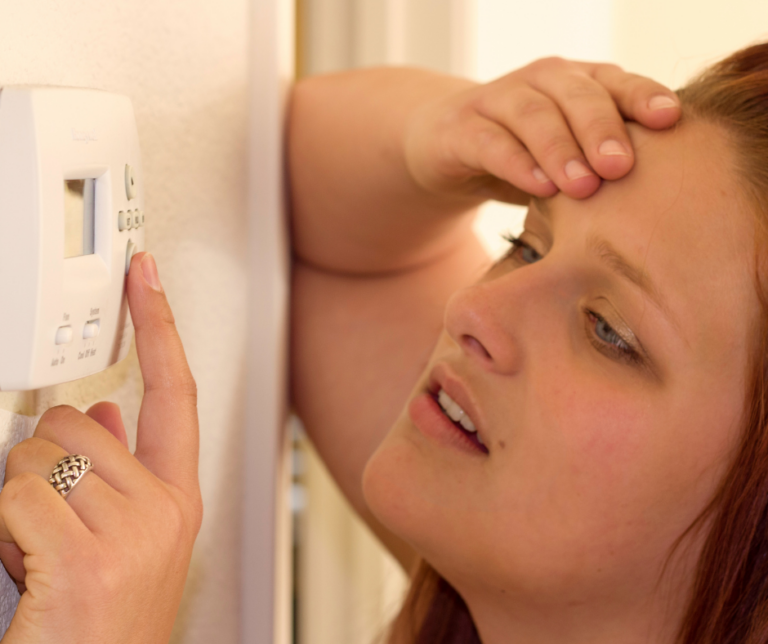
Is It Your Thermostat or Your HVAC System?
Several thermostat symptoms overlap with problems in the heating or cooling equipment itself. Hot and cold spots, for example, are more often caused by a clogged air filter or obstructed ductwork than by the thermostat. This table shows where the overlap tends to occur:
| What You Notice | Possible Thermostat Cause | Possible System Cause |
|---|---|---|
| System will not start | Wiring defect or failed temperature sensor | Equipment or electrical fault requiring diagnosis |
| System will not shut off | Sensor malfunction, wiring defect, or programming error | Equipment fault requiring diagnosis |
| Erratic temperature swings | Calibration issues, sensor problems, or electrical issues | Equipment fault requiring diagnosis |
| Rumbling, boiling, or knocking noises | Thermostat not regulating indoor temperature properly | Problem within the furnace or air conditioner |
| Hot and cold spots | Improper calibration | Clogged air filter or obstructed ductwork |
Because the same symptom can come from either source, a professional inspection is the reliable way to tell them apart before you spend money on the wrong fix. If your system needs attention beyond the thermostat, our team also handles heating repair and air conditioning repair.
Upgrade Your Thermostat Today!
Is your thermostat showing signs of degraded performance? Heart of Ohio offers the repair and replacement solutions you need to restore reliable, long-lasting comfort to your home. For nearly 60 years, we have offered the superior comfort solutions that Northeast Ohio homeowners trust to keep their systems running smoothly.
Trust our team to get your thermostat back in working order fast. Call us at 330-764-1011 to request thermostat repair or replacement now!
When to Call for Thermostat Service
Early detection of thermostat issues helps you avoid larger problems down the line. Any of the five signs above is worth a professional look, and there are situations where waiting costs you more:
- Your system will not run at all during extreme weather. A complete loss of heating or cooling is an HVAC emergency, and our team is available 24 hours a day.
- Your system will not shut off. Every hour of unnecessary runtime adds to your energy bills and to wear on the equipment.
- You notice electrical symptoms. Faulty wiring and connection problems are safety concerns as well as comfort ones, and our licensed electrical team can address them.
- Recalibration does not hold. A thermostat that drifts back out of calibration after being corrected is signaling that replacement may be the better long-term answer.
Call Heart of Ohio at 330-764-1011 to schedule thermostat repair or installation.
Bad Thermostat Frequently Asked Questions
How do I know if my thermostat is bad or if it's my HVAC system?
The symptoms overlap, which is what makes it difficult to tell. Hot and cold spots are more often caused by a clogged air filter or obstructed ductwork than by the thermostat, while failed startups and shutdown failures more often trace back to wiring defects or a failed temperature sensor. A professional inspection is the reliable way to identify the source before you pay for the wrong repair.
Why won't my HVAC system turn on even though the thermostat is set correctly?
A wiring defect may have caused the thermostat to lose its connection with your heating or cooling system, so the signal to start never reaches the equipment. It can also be a failed temperature sensor misreading your home as already being at the desired temperature, which prevents the system from turning on at all.
Can a bad thermostat raise my energy bill?
Yes. A malfunctioning sensor, a wiring defect, or an improperly programmed thermostat can keep your heating or cooling equipment running longer than necessary. That extra runtime shows up directly on your utility bills and adds unnecessary wear to the system.
Can a thermostat cause loud noises from my furnace?
It can. Rumbling, boiling, or knocking sounds from your furnace or air conditioner sometimes point to a thermostat that is not regulating your indoor temperature properly rather than a fault in the equipment itself. Because those noises can also indicate a genuine equipment problem, it is worth having the system inspected.
Should I repair or replace a faulty thermostat?
It depends on the cause. Calibration problems and wiring issues can often be corrected, while repeated failures may point toward replacement as the better long-term option. Heart of Ohio offers both repair and replacement solutions, and our team will explain which makes sense for your home. Call 330-764-1011 to schedule an inspection.




Contact Us
Contact

The Benefits of Combining Companies
The best of each company; the potential to grow
- An expanded service area
- Faster 24/7 service
- More efficient manpower on projects
- Technicians who have been trained in specialty services
- All home services under one name